

New Aquaculture Signs Help Tell the Story of Cape Cod’s Oyster Farms
Published on: June 9, 2026
The next time you’re visiting a Cape Cod beach, town landing, or boat ramp, keep an eye out for something new.
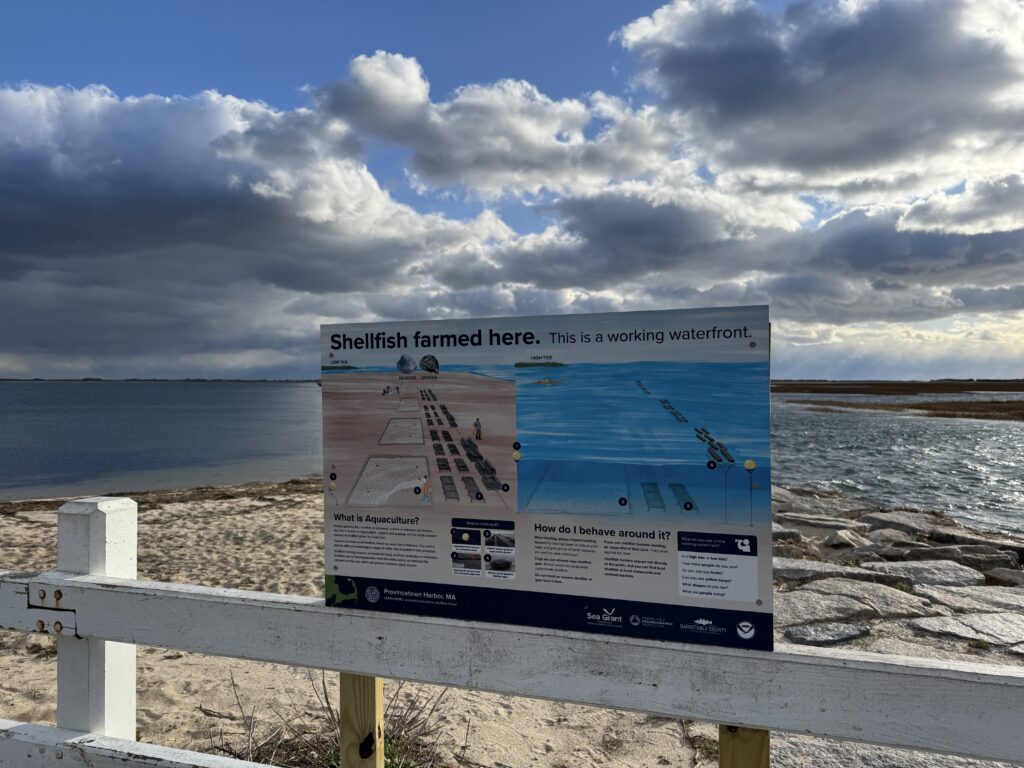
Thirty-seven educational signs have been installed across Cape Cod to help residents and visitors better understand shellfish aquaculture, an important and growing industry in Massachusetts worth more than $30 million per year.
You’ll find the signs at public access points in Provincetown, Truro, Wellfleet, Eastham, Orleans, Brewster, Dennis, Yarmouth, Barnstable, Mashpee, and Bourne. Located near shellfish farming areas, the signs explain what aquaculture is, how oyster farms work, what different types of gear look like, and how visitors can safely enjoy the shoreline around active farms.

Helping People Understand What They’re Seeing
For many beachgoers, shellfish farms can raise questions.
What are those cages?
Why are some farms visible at low tide but not high tide?
Can I walk through a farm?
The idea for the signs came directly from conversations with local shellfish growers.
“One of the growers said to me, ‘I don’t mind talking with visitors about how we raise oysters, but it would be nice if they could get the basics back at the parking lot, and also some info on how to safely walk out onto the flats,'” said Abigail Archer, Fisheries & Aquaculture Specialist with Barnstable County’s Cape Cod Cooperative Extension and Woods Hole Oceanographic Institution Sea Grant.
That conversation sparked a multi-year effort involving shellfish farmers, shellfish wardens, natural resource staff, designers, educators, and Sea Grant partners from across southern New England.
Built With Local Input
Project partners spent years gathering feedback from shellfish growers and town officials about common questions, safety concerns, and interactions between the public and working waterfronts.
That information shaped the final signs, which include:
- An introduction to shellfish aquaculture
- Illustrations showing how farming gear appears at different tides
- Information about the economic importance of shellfish farming
- Safety and etiquette tips for visitors
- QR codes linking to town-specific aquaculture information and regulations
Two versions of the signs were created to reflect different farming practices used across Cape Cod communities.
Scan the QR Code to Learn More
Each sign includes a QR code that connects visitors to additional information about shellfish aquaculture on Cape Cod, including how farms operate and the role they play in local communities.
Visitors can also explore the online guide here:
Can You Find All 37?
The signs may be educational, but they can also be part of your next Cape Cod adventure.
Whether you’re visiting the Outer Cape, exploring a town landing, launching a kayak, or heading to your favorite beach, keep an eye out for these new aquaculture signs.
How many can you find this summer?
According to Archer, one of her favorite features is the “I Spy” activity included on the signs.
“It was a long process, but I am so happy with how they turned out, and I look forward to a day when I can see grownups and kids playing the I Spy game that’s in the bottom right corner of the signs,” she said.
Why It Matters
Shellfish aquaculture supports local jobs, working waterfronts, and Cape Cod’s coastal economy.
By helping people better understand what they’re seeing on the water, these signs encourage positive interactions between visitors, residents, and shellfish growers while highlighting the important role aquaculture plays in our coastal communities.
Cape Cod Cooperative Extension: Working for You
Follow Cape Cod Cooperative Extension on Facebook and Instagram for resources, updates, and events.
Learn more about all our programs at capecod.gov/extension.
Legal Disclaimer:
EIN Presswire provides this news content "as is" without warranty of any kind. We do not accept any responsibility or liability for the accuracy, content, images, videos, licenses, completeness, legality, or reliability of the information contained in this article. If you have any complaints or copyright issues related to this article, kindly contact the author above.
